


IMAXT and Rosetta: the teams that took on the 3D tumour mapping challenge
Learn about how IMAXT and Rosetta have been at the forefront of the spatial biology revolution.


Currently viewing section: About
Location: The Royal Society, 6-9 Carlton House Terrace, London SW1Y 5AG UK
This meeting was held in memory of Professor Greg Hannon who sadly passed away in April 2026. Greg was an extraordinary scientist, leader and collaborator. He was also a champion of Cancer Grand Challenges from its inception, through his leadership of the ground-breaking IMAXT and SPACE teams, and more recently as part of the ILLUMINE team. Greg was the Chair of the organising committee for this meeting and his incredible contributions to the field were recognised throughout the programme.
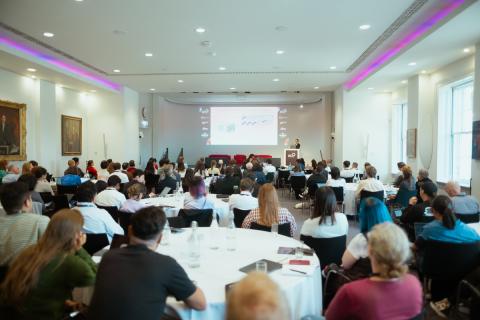
This landmark conference brought together global leaders in cancer research, technology development and clinical practice to explore the frontiers of spatial biology. As a rapidly evolving field, the meeting showcased how cutting-edge tools and collaborative science were unlocking new insights into cancer and how these advances could help shape the future of patient




10am–11am - Registration and light refreshments
11am–11.45am - Welcome and talk in memory of Professor Greg Hannon
David Scott, Director, Cancer Grand Challenges, UK
Dario Bressan, Cancer Research UK Cambridge Institute, UK
11:45am–12.15pm
Theme one - Innovating spatial technologies for cancer discovery and intervention (1/3)
Organiser, session chair: Sinem Saka, European Molecular Biology Laboratory, DE
Decoding the Spatial Layer of Cellular Regulation
12.15pm–12.30pm
Selected talk: Giorgia Battistoni, Cancer Research UK Cambridge Institute, UK
Illuminating Spatial Biology: Light-Driven Combinatorial Barcoding for Tunable Multi-Omic Profiling
12.30pm–1pm
Invited speaker: Fei Chen, Broad Institute, US
Spatial Genomics to Decode Cancer Evolution in Tissues
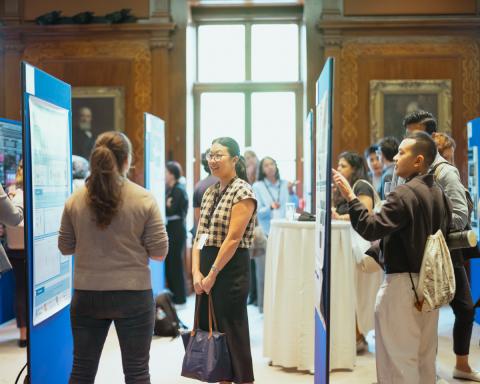
1pm–2pm - Break: Lunch served around posters
2pm–2.30pm
Theme one - Innovating spatial technologies for cancer discovery and intervention (2/3)
Invited speaker: Shahar Alon, Bar-Ilan University, IL
Mapping Cell States in Tumor Ecosystems with High-Resolution Spatial Genomics
2.30pm–2.45pm
Selected talk: Kuanwei Sheng, Wyss Institute at Harvard University; Systems Biology Department at Harvard Medical School, US
Synchronized in situ amplification enables high-plex protein imaging from cells to deep tissues
2.45pm–3pm
Selected talk: Jaime Casado García-Consuegra, Institute for Bioengineering of Catalonia, ES
Spatial tracking of clonal evolution reveals genetic and chemotherapeutic dynamics in Small Cell Lung Cancer
3pm–3.30pm
Invited speaker: Rong Fan, Yale University, US
Seeing RNA Biology in Action in the Human Tumor Atlas
3.30pm–4pm - Break: Refreshments served around posters
4pm–4.30pm
Theme one - Innovating spatial technologies for cancer discovery and intervention (3/3)
Organiser, session chair: Dario Bressan, Cancer Research UK Cambridge Institute, UK
In search of the hidden "omics" - Spatial analysis of the tumour micro-environment across scales and molecular domains
4.30pm–4.45pm
Selected talk: Linda Decker, European Molecular Biology Laboratory Heidelberg, DE
mechanoMaST: A novel workflow combining spatial transcriptomics and AFM-based mechanical measurements in colorectal cancer liver metastases
4.45pm–5pm
Selected talk: Huai-Ching Hsieh, Stanford University, US
3D pathology-guided micromachining
5pm-5.30pm
Invited speaker: Elizabeth Hillman, St. Jude Children's Research Hospital, US
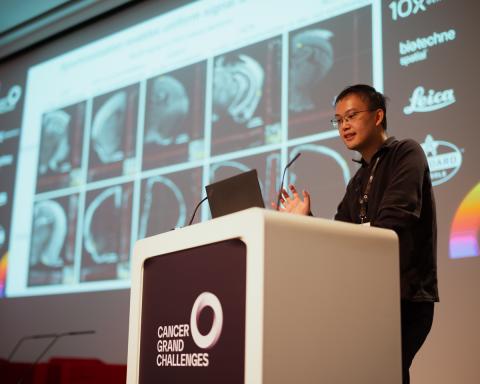
High-speed, multiplexed volumetric microscopy: How, what and why?
5.30pm-5.40pm
Sponsor talk: Joanna Kowal, Bio-Techne Spatial, CH
Same-Section Spatial Multiomics for Integrated RNA and Protein Profiling to Resolve Tumor-Immune Landscape
5.40pm–7.30pm - Poster session and welcome reception
8.30am–9am - Registration and light refreshments
Session chair: Dario Bressan, Cancer Research UK Cambridge Institute, UK
Theme two - Translating spatial technologies: From lab prototypes to clinical practice (1/2)
9am–9.30am
Invited speaker: Bernd Bodenmiller, Zurich University, CH
Highly multiplexed imaging of tissues with subcellular resolution by imaging mass cytometry
9.30am–9.45am
Selected talk: Keren Bahar Halpern, Weizmann Institute of Science, IL
Mapping tumor cell turnover rates in colorectal cancer using spatial transcriptomics and stool-derived liquid biopsy
9.45am–10am
Selected talk: Rafa Najumudeen, Institute for Molecular Medicine Finland, FI
Spatial multi-omics reveals a nutrient gate for colorectal cancer initiation
10am–10.15am
Selected talk: Lasse Meyer, University of Zurich, CH
A spatial multi-omic portrait of survival outcome for clear cell renal cell carcinoma
10.15am-10.25am
Sponsor talk: 10X Genomics Showcase
Jonathan Cogan, 10X Genomics, UK
10.25am–11am - Break: Refreshments served around posters
11am–11.30am
Theme two - Translating spatial technologies: From lab prototypes to clinical practice (2/2)
Invited speaker: Peter Sorger, Harvard University, US
Spatial profiling of human tumors and immunity in three dimensions
11.30am–11.45am
Selected talk: Kristy Ou, European Molecular Biology Laboratory, DE
Transcriptional reprogramming couples with microenvironment remodeling along the follicular lymphoma transformation axis
11.45am–12pm
Selected talk: Jackson Weir, Broad Institute of MIT and Harvard, US
A tissue repair external state program drives cancer cell dedifferentiation and immune evasion in melanoma
12pm–12.30pm
Invited speaker: Joakim Lundeberg, SciLifeLab, SE
Spatial Technologies to Unveil and Predict the Hidden Architecture of Cancer
12.30pm–1.15pm - Panel discussion
From bench to bedside: Accelerating deployment for real-world impact
Chair: Peter Sorger, Harvard Medical School, US
Bernd Bodenmiller, Zurich University, CH
Rong Fan, Yale University, US
Joanna Kowal, Bio-Techne Spatial, CH
Sherene Loi, Peter MacCallum Cancer Center, AU
Barbara Marte, Nature, UK
1.15pm–2.30pm - Break: Lunch served around posters
2.30pm–3pm
Theme three - Making spatial data work: From pixels to patient impact (1/3)
Organiser, session chair: Nicholas Walton, Institute of Astronomy, University of Cambridge, UK
The SPACE data platform, enabling high throughput spatial data studies at scale (speaker slides here)
3pm–3.15pm
Selected talk: Leor Rose, Ben-Gurion University of the Negev, IL
Multimodal imaging and computational profiling of triple negative breast cancer
3.15pm–3.30pm
Selected talk: Alexander Xu, University of Maryland College Park, US
Spatially-Guided Predictions for Increasing CD8+ T Cell Infiltration into Solid Tumors
3.30pm–4pm
Invited speaker: Adam Taylor, Sage Bionetworks, UK
Maximizing Map Makers and Curating Cartography: Building Human-Centric Data Ecosystems for Cancer Research Communities
4pm–4.30pm - Break: Refreshments served around posters
4.30pm–5pm
Theme three - Making spatial data work: From pixels to patient impact (2/3)
Invited speaker: Jason Swedlow, CZ Biohub, UK
BioImaging Data for AI
5pm–5.15pm
Selected talk: Sylvia Plevritis, Stanford University, US
Mapping Metastatic Niches and Treatment Resistance with Spatial Community, Colocalization, and Spatiotemporal Modeling
5.15pm–5.45pm
Invited speaker: Dana Pe'er, Sloan Kettering Institute, US
Through the Wasserstein Wormhole: trajectories of tumor ecosystem remodeling
5.45pm–7pm - Poster session and drinks reception
8.30am–9am - Registration and light refreshments
9am–9.30am
Theme four - Scaling impact: Insights from flagship programmes and global consortia
Invited speaker: Josephine Bunch, National Physical Laboratory, UK
Imaging metabolic heterogeneity in cancer
9.30am–9.45am
Selected talk: Martin Zacharias, University College London Cancer Institute, UK
Integrating spatial multi-omics and histomorphology to map metastatic seeding capacity in the TRACERx-PEACE lung cancer autopsy cohort
9.45am–10.30am
Panel discussion. Beyond the dataset: Scaling, standardising, and sharing spatial biology
Chair: Jason Swedlow, CZ Biohub, US
Panellists:
Josephine Bunch, National Physical Laboratory, UK
Nicola Cahill, 10xGenomics, UK
Dana Pe’er, Sloan Kettering Institute, US
Adam Taylor, Sage Bionetworks, UK
10.30am–11am - Break: Refreshments will be served
11am–11.15am
Theme three - Making spatial data work: From pixels to patient impact (3/3)
Selected talk: Tal Goldberg, Bar-Ilan University, IL
Mapping spatially associated cell states and transcriptional dynamics in the tumour microenvironment
11.15am–11.30am
Selected talk: Humza Ashraf, Mayo Clinic, US
MC-SCOPE: Agentic AI for Hypothesis-Driven Spatial Single-Cell Analysis
11.30am–12pm
Invited speaker: Oliver Stegle, European molecular biology laboratory, DE
From measurement to mechanism: decoding tumour plasticity in space and time
12pm–12.30pm - Poster prizes and closing remarks
12.30pm–1.30pm - Break: Lunch will be served
The field of spatial biology is at an inflection point, thanks to rapid advancements in AI-driven analysis and multi-omics integration. Emerging tools and technologies have allowed spatial mapping of tumour tissues, providing unprecedented insights into tumour heterogeneity, revealing complex cellular interactions within the microenvironment, enabling researchers to map cancer progression and resistance in three dimensions.
By addressing key challenges, such as the sheer volume of data being generated as well as the integration of vastly different approaches, spatial biology is now poised to move even further away from descriptive studies towards addressing important translational questions by becoming integrated in the clinic. Potential applications range from identifying predictive biomarkers and understanding treatment resistance mechanisms to informing precision medicine strategies.
Topics at the conference included:
In 2015 Cancer Grand Challenges set the 3D tumour mapping challenge and funded teams IMAXT and Rosetta. The teams have been at the forefront of the spatial biology revolution and their progress has poised the research community to be able to develop new treatment strategies in ways that wouldn't have been possible before. In 2024 a further investment of £5.25M from CRUK was provided to members of IMAXT to set up the Spatial Profiling and Annotation Centre of Excellence (SPACE).
Based at the University of Cambridge and led by Professor Greg Hannon, along with Dr Nicholas Walton and Dr Dario Bressan, SPACE will democratise IMAXT’s cutting-edge spatial biology platform and foster collaborations across the research community. By enabling scientists worldwide to explore tumours in 3D, SPACE is advancing our understanding of cancer's complexity within its spatial context.
This conference was organised by a dedicated steering committee.
Meet the committee members below.

