


CANCAN
Meet CANCAN, whose challenge is to understand and reverse cachexia and declining performance status in cancer patients.

Currently viewing section: About
Location: The Royal Society, 6-9 Carlton House Terrace, London SW1Y 5AG
This conference explored cancer as a systemic disease, emphasising that tumours cannot be understood or treated in isolation. By integrating expertise across disciplines, the conference was aimed at deepening understanding of cancer as a host-dependent process and open new frontiers in prevention, treatment, and patient care.
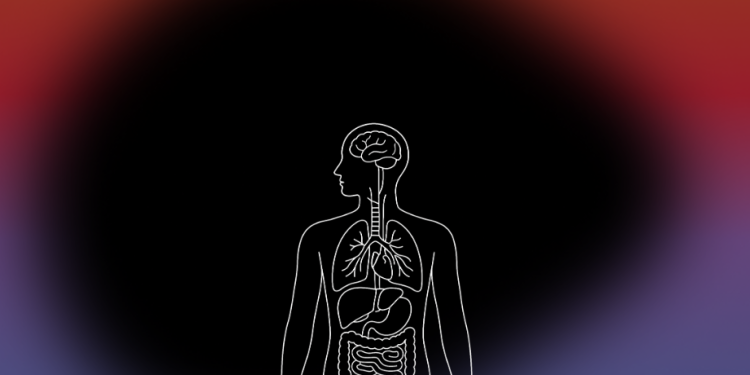
Cancer progressively co-opts and reconfigures immune, metabolic, and neural networks, hijacking normal evolved responses and establishing host-tumour bidirectional interactions that extend far beyond the tumour and its surrounding microenvironment. This systemic interplay shapes disease progression, therapeutic response and patients' outcomes, underscoring the need for approaches that consider the whole individual rather than focusing solely on the tumour.
10am – 11:15am
Registration and light refreshments
11:15am – 11.30am
Welcome: Lorenzo de la Rica, Cancer Grand Challenges
11:30am – 12pm
Organiser talk: Tobias Janowitz, Cold Spring Harbour Laboratory, US
Conference scene setting and mechanisms of behavioral changes during cancer progression
Theme one: Whole body metabolism and cancer (1/3)
12pm – 12:15pm
Selected talk: Emma Brown, Cancer Research UK Scotland Institute, UK
Mapping inter organ metabolic networks in cancer cachexia by translational PET imaging
12:15pm – 12:30pm
Selected talk: Yetiş Gültekin, Koch Institute for Integrative Cancer Research at MIT, US
Pancreatic cancer-associated organ dysfunction promotes muscle autophagy and contributes to peripheral tissue wasting
12:30pm – 1pm
Invited speaker: Stephen O'Rahilly, University of Cambridge, UK
Endocrine control of energy balance and partitioning in health and disease
1pm – 2pm
Break: Lunch will be served around posters
Theme two: Immuno-metabolic crosstalk
2pm – 2:30pm
Invited speaker: Adrian Hayday, The Francis Crick Institute, UK
Talk title: The regulation of physiology [or not] by T cells
2:30pm – 2:45pm
Selected talk: Cort Breuer, Stanford University School of Medicine, US
Interferons impart divergent metastatic evolution and therapy responses
2:45pm – 3pm
Selected talk: Ezequiel Dantas, NYU Langone Health, US
JAK1/2 inhibition delays cachexia and improves survival through increased food intake
3pm – 3:15pm
Selected talk: Nicolas Rabas, The Francis Crick Institute, UK
Cancer-driven neutrophil priming couples systemic epithelial regenerative programs with pre-metastatic niche formation
3:15pm – 3:30pm
Selected talk: Naomi van den Berg, The Francis Crick Institute, UK
Immunometabolic gatekeeping: how tissue metabolism conditions tumor immunity
3:30pm – 4pm
Invited speaker: Johanna Joyce, University of Lausanne, CH
Unravelling the Complexity of Cancer Ecosystems
4pm – 4:30pm
Break: Refreshments will be served
Theme two: Whole body metabolism and cancer (2/3)
4:30pm – 5pm
Organiser talk: Eileen White, Rutgers Cancer Institute of New Jersey, US
Metabolic alterations driving cancer cachexia
5pm – 5:15pm
Selected talk: Kay Macleod, University of Chicago, US
BNIP3-dependent muscle atrophy in cancer cachexia promotes PDAC progression
5:15pm – 6:15pm
Panel discussion: Metabolic modulation and cancer
Chair: Marcus Goncalves, NYU Langone Health, US
Panellists:
Stephen O'Rahilly, University of Cambridge, UK
Thales Papagiannakopoulos, NYU School of Medicine, US
Eileen White, Rutgers Cancer Institute of New Jersey, US
This panel examines the mechanistic basis through which nutritional status, systemic metabolism, and metabolic therapies influence tumor biology. Discussion will center on current evidence regarding how diet‑induced alterations in insulin signaling, inflammation, nutrient availability, and metabolic stress impact tumor initiation, growth kinetics, and therapeutic susceptibility.
6:15pm – 8pm
Poster session and welcome reception
8:30am – 9am
Registration and light refreshments
Theme three: The nervous system and cancer
9am – 9:30am
Invited speaker: Erica Sloan, Monash University, AU
Metastasis within host neural systems: Tumour-neuron interactions shape disease progression and therapy response
9:30am – 10am
Invited speaker: Leanne Li, The Francis Crick Institute, UK
Cancer and the peripheral nervous system
10am – 10:15am
Selected talk: Ya-Hsuan Ho, The Francis Crick Institute, UK
Nociceptive sensory innervation suppresses tertiary lymphoid structure formation and promotes lung cancer progression
10:15am – 10:30am
Selected talk: Thales Papagiannakopoulos, NYU School of Medicine, US
A dietary switch promotes sensory-neuron dependent cancer-associated cachexia
10:30am – 11am
Invited speaker: Frank Winkler, German Cancer Research Center (DKFZ), DE
Neuro-cancer interactions drive brain tumor progression and response to therapies
11am – 11:30am
Break: Refreshments will be served
Theme four: Host biomarkers for patient stratification
11:30am – 12pm
Organiser talk: Caroline Dive, Cancer Research UK Manchester Institute, UK
Tracking tumour and immune changes in cell-free DNA to predict response in advanced melanoma patients treated with immune checkpoint inhibitors
12pm – 12:15pm
Selected talk: Jack Sanford, NYU Langone Health, US
Evaluation of putative lung cancer cachexia drivers in vivo
12:15pm – 12:30pm
Selected talk: Alice Wang, Cold Spring Harbor Laboratory, US
Conserved sleep fragmentation precedes weight loss in cachexia
12:30pm – 1pm
Invited speaker: Jason Lewis, Memorial Sloan Kettering, US
Harnessing low abundance targets for cancer diagnosis and treatment
1pm – 2pm
Break: Lunch will be served around posters
Theme five: Therapeutic targeting of the host (1/2)
2pm – 2:30pm
Invited speaker: Evangelos Giampazolias, Cancer Research UK Manchester Institute, UK
Decoding host-microbiome interactions in cancer immunity: Killing cancer with a gut instinct
2:30pm – 2:45pm
Selected talk: Marzia Santamaria, IFOM, IT
Fasting induces ferroptosis by modulating lipid metabolism in breast cancer
2:45pm – 3:30pm
Panel discussion: Leveraging Human Physiology Against Cancer
Chair: Tobias Janowitz, Cold Spring Harbour Laboratory, US
Panellists:
James DeGregori, University of Colorado, US
Sherene Loi, Peter MacCallum Cancer Center, AU
Ashani Weeraratna, Johns Hopkins University, US
Frank Winkler, German Cancer Research Center (DKFZ), DE
This panel explores the emerging paradigm of leveraging host physiology—immune, endocrine, metabolic, neural, microbial, and stromal—to modulate tumor progression and therapeutic response. Rather than targeting tumor‑intrinsic processes alone, the discussion will examine how systemic signals shape cancer evolution, metastatic potential, and therapeutic resistance.
3:30pm – 4pm
Break: Refreshments served around posters
Theme six: Cancer in context
4pm – 4:30pm
Invited speaker: James DeGregori, University of Colorado, US
Context-dependent selection sculpts mutational landscapes in the normal lung
4:30pm – 5pm
Invited speaker: Ashani Weeraratna, Johns Hopkins University, US
A Complex TiME: How the aging tumor immune microenvironment governs tumor progression
8:30am – 9am
Registration and light refreshments
Theme five: Therapeutic targeting of the host (2/2)
9am – 9:30am
Invited speaker: Claudio Vernieri, AIRC Institute of Molecular Oncology, IT
Talk title: Combinations of nutrient deprivation and targeted metabolite supplementations in cancer therapy
9:30am – 9:45am
Selected talk: Toshiro Shirakawa, Kobe University, JP
Immune activation and microbiome diversity in a Phase I study of B440, an oral Bifidobacterium-engineered WT1 cancer vaccine
9:45am – 10am
Selected talk: Giulia Salvadori, IFOM, IT
Leucine is a fasting mimetic with broad immunomodulatory and antitumor activity
10am – 10:15am
Selected talk: Andrea de Castro, The Francis Crick Institute, UK
Depleting tumour-infiltrating Tregs enhances the efficacy of KRAS-mutant targeted therapies in lung cancer
10:15am – 11am
Break: Refreshments will be served
Theme one: Whole body metabolism and cancer (3/3)
11am – 11:30am
Organiser talk: Marcus Goncalves, NYU Langone Health, US
Talk title: TBC
11:30am – 11:45am
Selected talk: Debasmita Mukherjee, Cancer Research UK Cambridge institute, University of Cambridge, UK
Changes in composition of cancer associated fibroblasts promote pancreatic cancer cachexia
11:45am – 12pm
Selected talk: Claire Connell, University of Cambridge, UK
Energy Balance in Pancreatic Cancer Cachexia
12pm – 12:30pm
Invited speaker: Mariam Jamal-Hanjani, University College of London, UK
Lung cancer metastasis from the perspective of the cancer cell, its microenvironment and host
12:30pm – 12:45pm
Closing remarks
12:45pm – 2pm
Lunch will be served
The second edition of the Cancer Grand Challenges Conference Series integrated diverse fields and defined the therapeutic value of targeting the host to treat cancer by bringing together thought leaders from across the cancer research spectrum with experts from immunology through to metabolism and neuroscience.
Cancer does not develop in isolation; it is influenced by the unique biology of its human host. The immune system, metabolic state, microbiome and factors such as aging and stress all shape tumour initiation, growth, metastasis, and therapeutic response. Research on these host-tumour interactions often remain siloed, limiting opportunities to integrate across disciplines. By uniting researchers from across the fields of cancer research and beyond, this conference served as a platform to drive innovative experimental approaches, thought-provoking discussions, and translational advances that reflect cancer not only as a disease of cells, but as a systemic host-influenced process.
Considering cancer as a systemic disease is integral to the approach of Cancer Grand Challenges team CANCAN in tackling the cachexia challenge, and an emerging theme across the Cancer Grand Challenges portfolio.
The conference fostered big-picture, interdisciplinary discussions between academic researchers, clinicians and medical professionals, members of the pharmaceutical industry and biotech, as well as funding bodies and policymakers. It was been designed for the wider scientific community, not just Cancer Grand Challenges funded researchers or those focused on cancer.
Topics included:
This conference was organised by a dedicated steering committee.
Meet the committee members below.
Please take a moment to familiarise yourself with the important information below regarding how we run our events:

